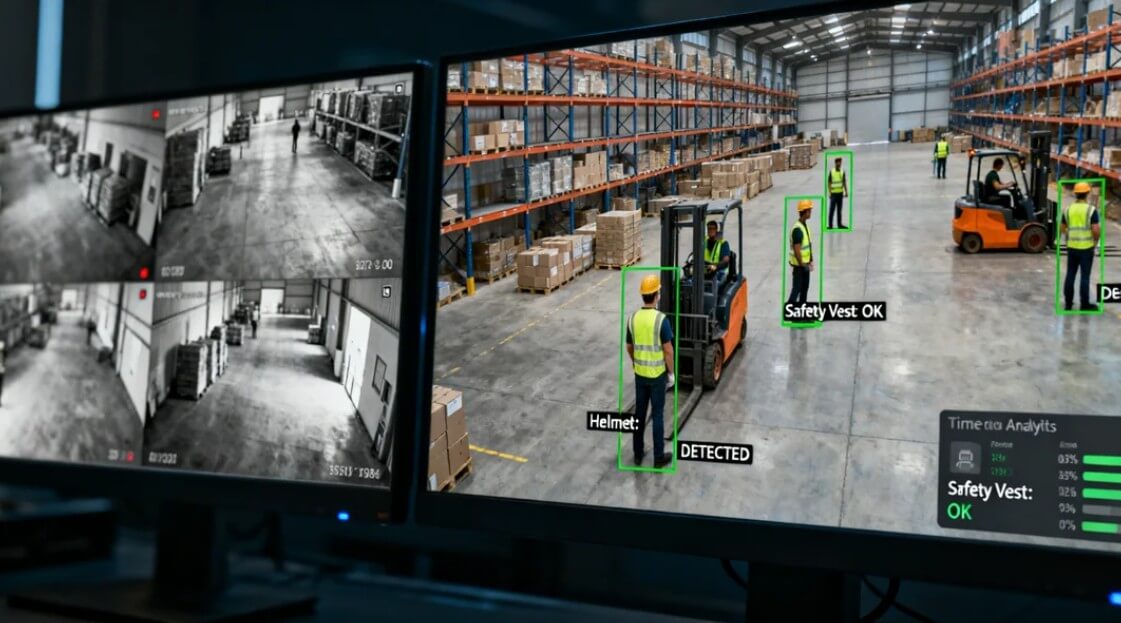
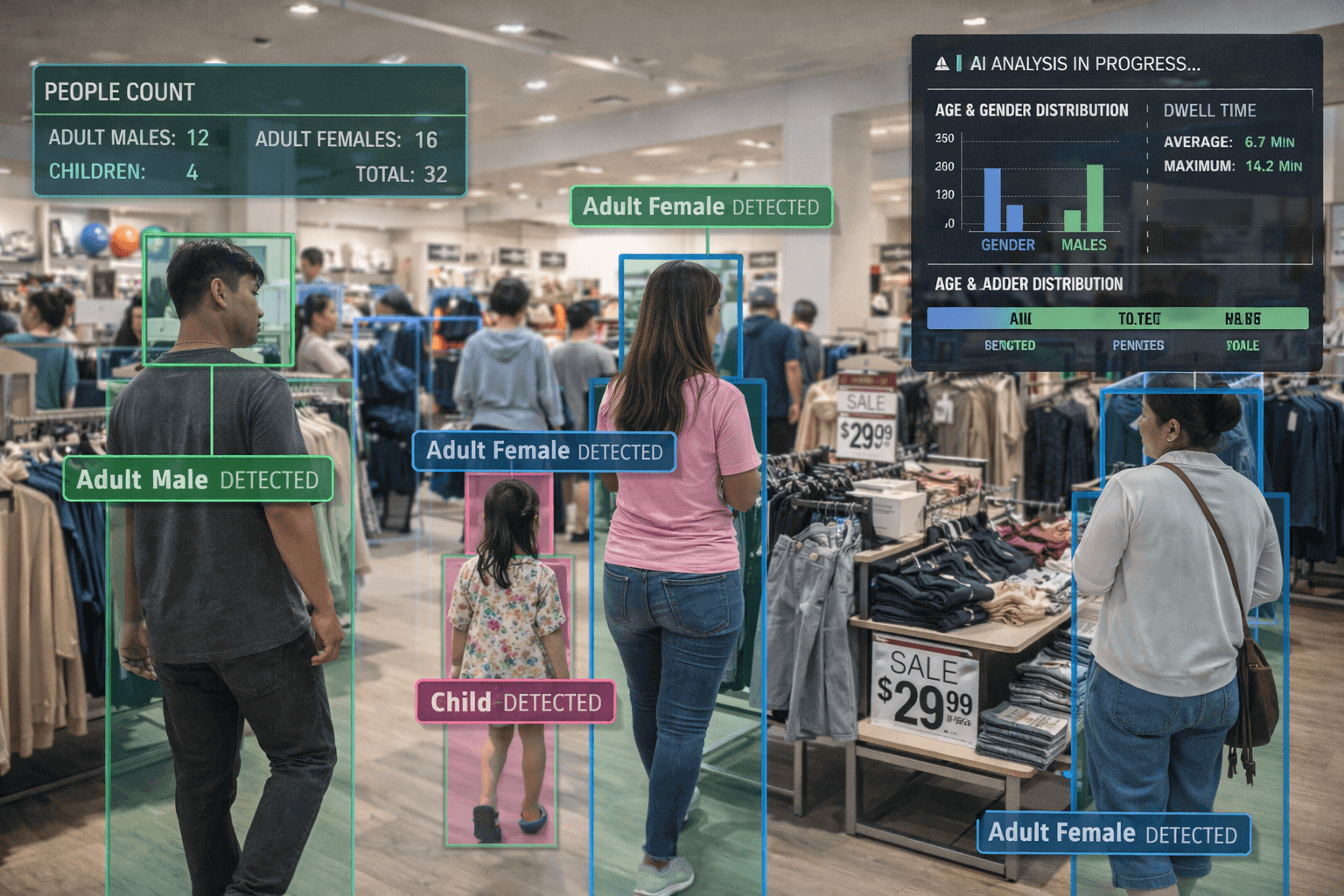
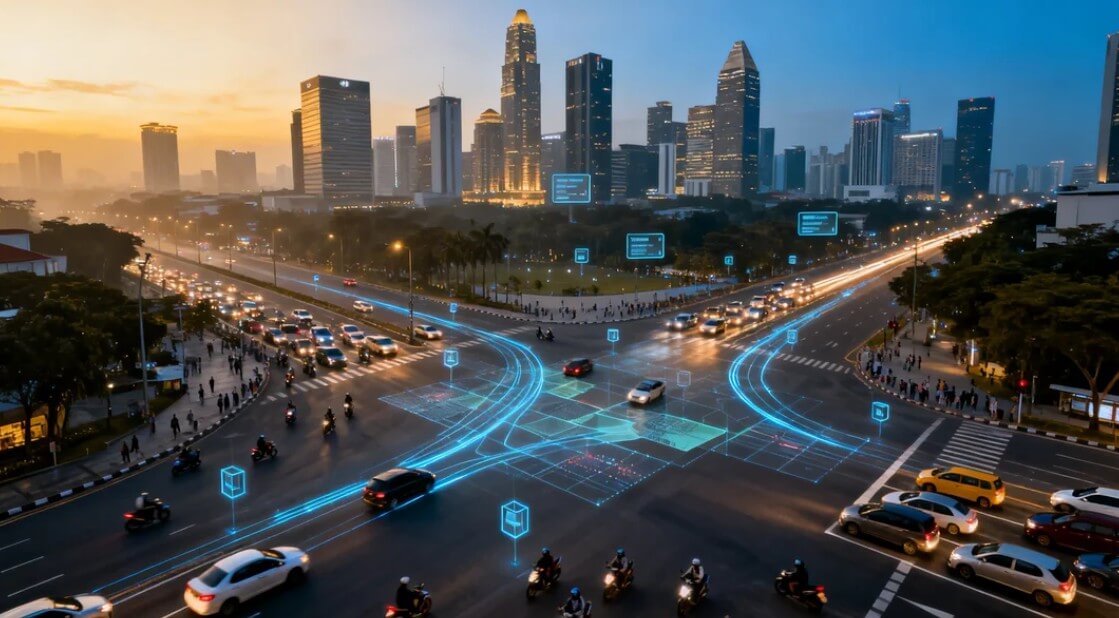
Every 15 seconds, a worker dies from a work-related accident or disease somewhere in the world. According to the International Labour Organization, 2.3 million people globally succumb to work-related accidents and diseases annually. Many of these deaths could have been prevented with proper Personal Protective Equipment (PPE).
Yet here's the uncomfortable truth: even in organizations with strict safety policies, PPE compliance rates often fall below 70% when relying solely on human supervision. Workers remove helmets when supervisors aren't watching. Safety glasses get pushed up on foreheads. High-visibility vests get left in lockers.
This is where artificial intelligence is making a profound difference. AI-powered PPE monitoring systems are achieving what human supervision alone cannot: consistent, continuous, and comprehensive safety compliance monitoring across entire facilities, 24 hours a day, 7 days a week.
The Problem with Traditional PPE Monitoring
For decades, PPE compliance has relied on a simple model: safety officers conducting regular patrols, checking that workers are wearing the required equipment, and documenting violations. While this approach is better than nothing, it has fundamental limitations.
The Coverage Gap
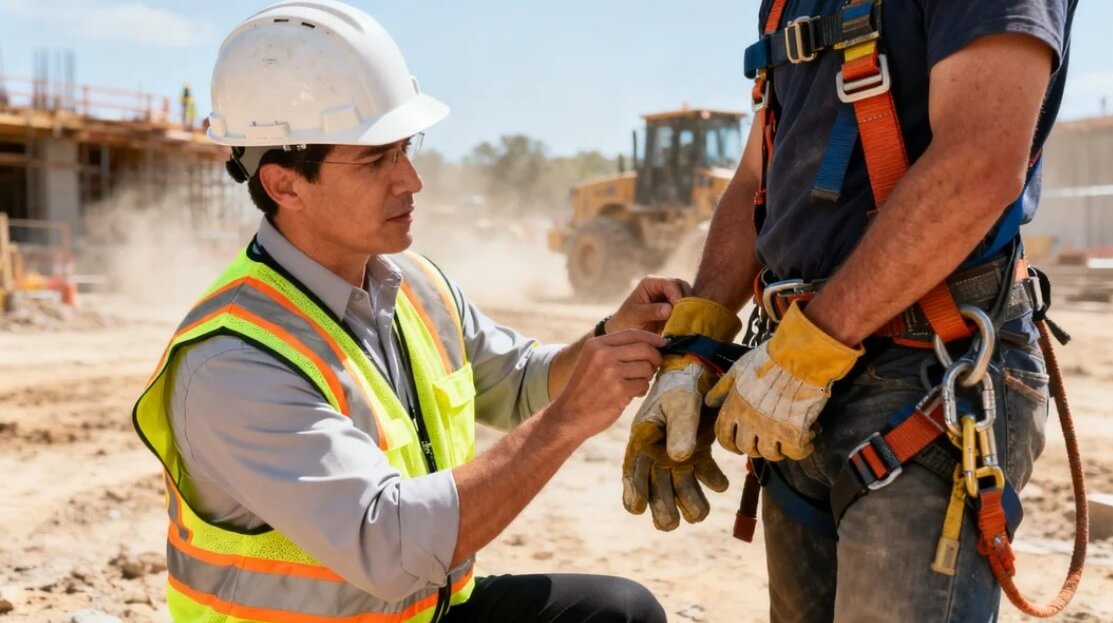
A safety officer can only be in one place at a time. In a large manufacturing facility or construction site, this means most areas go unmonitored most of the time. Workers quickly learn when inspections typically occur and adjust their behavior accordingly—a phenomenon psychologists call "observer effect."
The Consistency Problem
Human monitors are subject to fatigue, distraction, personal relationships, and unconscious bias. A supervisor might overlook a violation from a well-liked colleague while strictly enforcing rules with others. This inconsistency undermines the entire safety culture.
The Documentation Challenge
Manual recording of violations is time-consuming and often incomplete. When an incident occurs, organizations frequently struggle to demonstrate the compliance measures they had in place—a critical gap for legal and insurance purposes.
In Indonesia, workplace accidents cost businesses an estimated Rp 280 trillion annually in medical expenses, lost productivity, and compensation. A single serious injury can cost a company hundreds of millions of rupiah—far exceeding the investment in preventive monitoring systems.
How AI-Powered PPE Detection Works
AI PPE monitoring uses computer vision—a branch of artificial intelligence that enables computers to interpret visual information from cameras. Here's the process broken down:
Video Stream Connection
The AI system connects to your existing CCTV or IP cameras via RTSP streams. No special cameras required—if your current cameras can output video, they can be used for AI analysis.
Person Detection
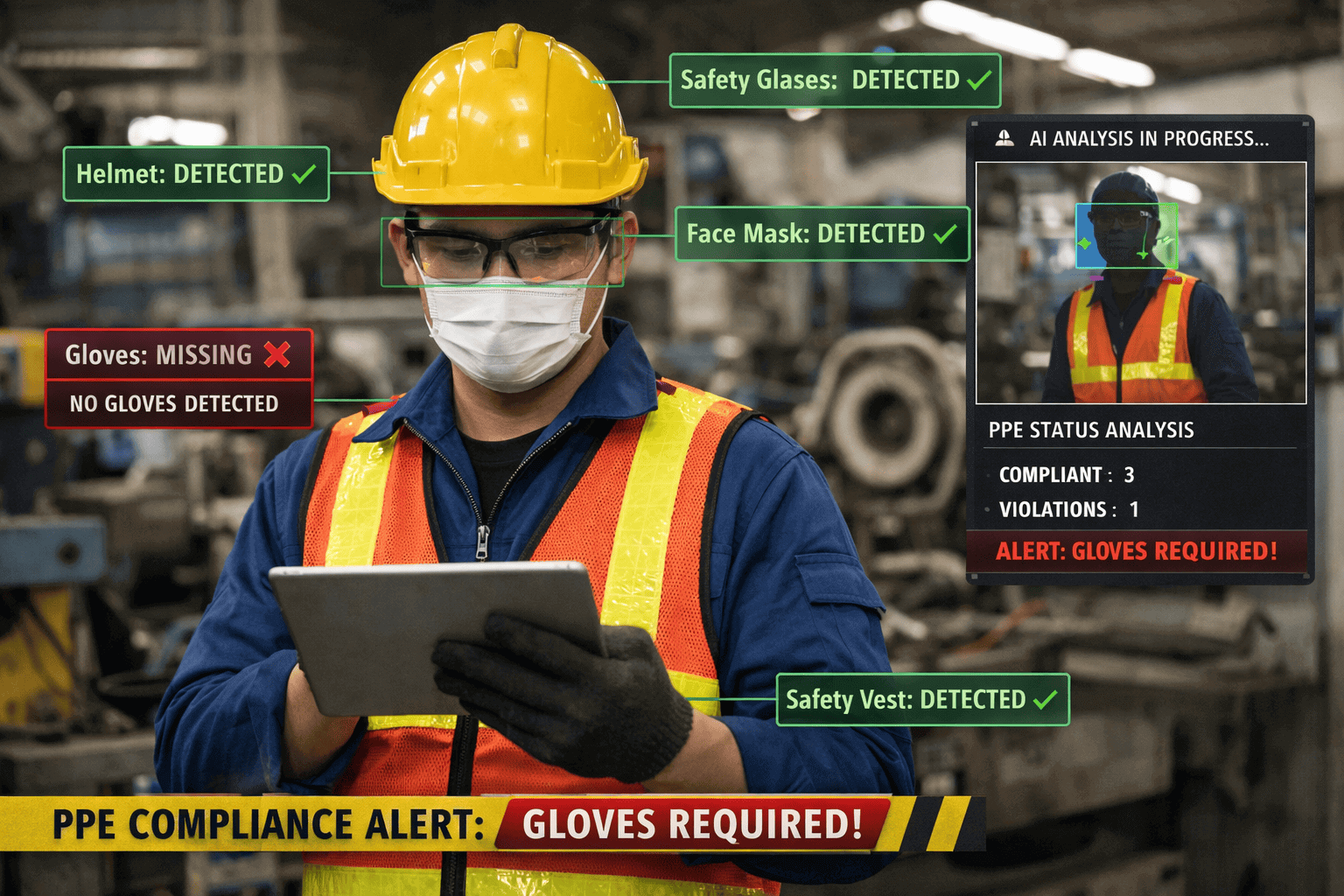
The AI first identifies all people within the camera's field of view, creating a bounding box around each individual. Modern systems can track multiple people simultaneously.
PPE Analysis
For each detected person, the system analyzes specific body regions to identify required PPE items: head (helmet), torso (vest), face (goggles/mask), hands (gloves). This happens in milliseconds.
Zone-Based Rules
Different areas may have different PPE requirements. The system applies correct rules based on camera location—helmets required in Zone A, full PPE in Zone B, etc.
Instant Alert & Documentation
When a violation is detected, alerts are sent immediately via mobile notifications, WhatsApp, email, or audio alarms. Every event is logged with timestamp, location, and image evidence.
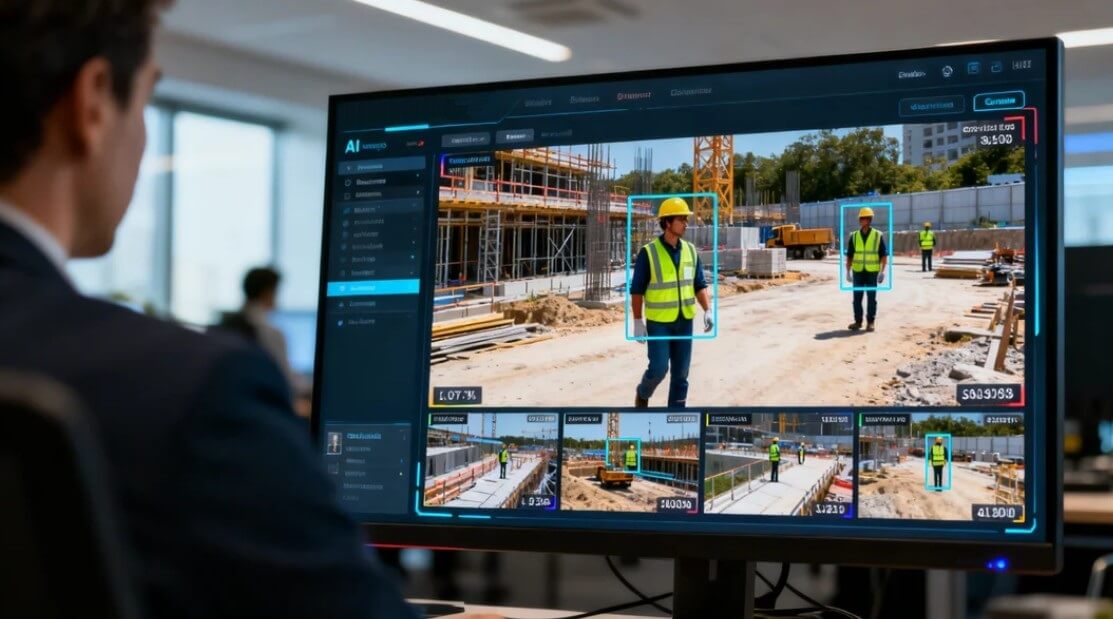
The entire detection process—from camera frame capture to alert delivery—typically takes less than 1 second. This means violations are flagged and addressed in real-time, before incidents can occur.
What PPE Can AI Actually Detect?
Modern AI-powered PPE detection systems can identify a wide range of safety equipment with high accuracy:
Detection Accuracy: What to Expect
Under optimal conditions (good lighting, 1080p resolution, appropriate camera angles), modern AI systems achieve:
6 Key Benefits for Your Organization
Dramatic Reduction in Incidents
Organizations report 40-60% reduction in PPE-related violations within the first three months of implementation.
24/7 Continuous Monitoring
Unlike human supervisors who work shifts, AI systems never take breaks. Night shifts, weekends, and holidays all receive equal monitoring attention.
Data-Driven Safety Insights
Analytics dashboards reveal patterns: which zones have most violations, what times problems occur, which PPE items are commonly forgotten.
Automated Compliance Documentation
Every detection event is logged with timestamp, location, and image evidence—creating an audit trail for regulatory compliance.
Reduced Labor Costs
Safety personnel can focus on addressing actual violations and improving safety culture rather than conducting routine patrols.
Consistent, Unbiased Enforcement
AI applies the same standards to everyone—no favoritism, no fatigue, no unconscious bias. Essential for building genuine safety culture.
"Since implementing AI-powered PPE monitoring, we've seen a 58% reduction in safety violations and zero recordable incidents related to missing protective equipment in the past 18 months."
Implementation Guide: Getting Started
Implementing AI PPE monitoring doesn't require replacing your existing infrastructure. Here's a practical roadmap:
Phase 1: Assessment (Week 1-2)
- Camera Audit: Evaluate existing CCTV coverage, resolution, and positioning. Most systems work with cameras 720p and above.
- Zone Mapping: Define which areas require which PPE. Document current rules and requirements.
- Stakeholder Alignment: Brief safety teams, union representatives, and management on the system's purpose.
Phase 2: Setup (Week 2-3)
- System Integration: Connect cameras to the AI platform via RTSP streams.
- Zone Configuration: Set up detection zones and assign PPE requirements to each.
- Alert Configuration: Define who receives alerts and escalation procedures.
Phase 3: Rollout (Week 3-4)
- Staff Communication: Inform all workers about the new monitoring system. Transparency builds trust.
- Training: Train safety personnel on using the dashboard and responding to alerts.
- Go Live: Enable full alerting and enforcement.
Frequently Asked Questions
Modern AI systems can identify hard hats, safety vests, protective eyewear, face masks, safety gloves, and safety footwear with 95-99% accuracy depending on camera quality and conditions.
AI-powered systems detect violations in less than 1 second. Alerts are sent immediately via mobile notifications, email, audio warnings, or integration with existing safety systems.
Yes, most solutions work with existing CCTV via RTSP streams. No camera replacement needed, though 720p minimum (1080p recommended) resolution affects accuracy.
Organizations typically see ROI within 6-12 months through reduced incidents, lower insurance premiums, and decreased compliance violations. A single prevented serious injury can offset the entire system cost.
AI PPE monitoring focuses on detecting safety equipment, not identifying individuals. Systems can be configured to blur faces or only capture violation events rather than continuous recording.
Taking the Next Step
AI-powered PPE monitoring represents a fundamental shift in how organizations approach workplace safety. Rather than relying on periodic human inspections that can only catch a fraction of violations, AI provides continuous, consistent coverage that transforms safety from reactive to proactive.
The technology is mature, proven, and accessible. Organizations across Indonesia—from manufacturing facilities to construction sites—are already seeing dramatic improvements in compliance rates and reductions in workplace injuries.
The question is no longer whether AI PPE monitoring works. The question is whether your organization can afford to continue without it.
Ready to Transform Your Workplace Safety?
See how Oventa's AI-powered PPE compliance monitoring can protect your workers and reduce incidents.
Schedule a Free Demo